
Please Leave Us A Message
Privacy statement: Your privacy is very important to Us. Our company promises not to disclose your personal information to any external company with out your explicit permission.
 Xuzhou Huahao Information Technology Co., Ltd.
Amid the wave of digital transformation, RFID technology, with its advantages of non-contact identification, batch reading, and precise tracking, has become a core tool for various industries to solve asset management challenges. From manufacturing workshops to hospital operating rooms and logistics transit warehouses, it is restructuring management logic across different scenarios. The following three benchmark cases reveal the essence of its implementation.
Manufacturing Industry: Digital Twin + RFID Unlocking Equipment Value
Benchmark Case: Sany Heavy Industry Workshop Equipment Intelligent Management Project
As a leading enterprise in construction machinery manufacturing, Sany Heavy Industry's workshops house tens of thousands of production assets, featuring high equipment mobility and complex management scenarios. After introducing RFID technology, it has built a full-process management system integrating "RFID tags + edge gateways + digital twin platforms":
1. Asset Coding: Attach anti-metal RFID tags to each production equipment and tooling fixture, input core information, and achieve precise identification of "one item, one code";
2. Real-time Tracking: Deploy RFID readers and positioning base stations at key passages and workstations in the workshop to monitor the real-time location of all equipment via a visual interface;
3. Intelligent Early Warning: Combine equipment operation data with usage frequency collected by RFID to enable the system to automatically generate maintenance reminders, proactively avoiding failure risks.

Medical Industry: Full-process Traceability Safeguarding Consumable Safety
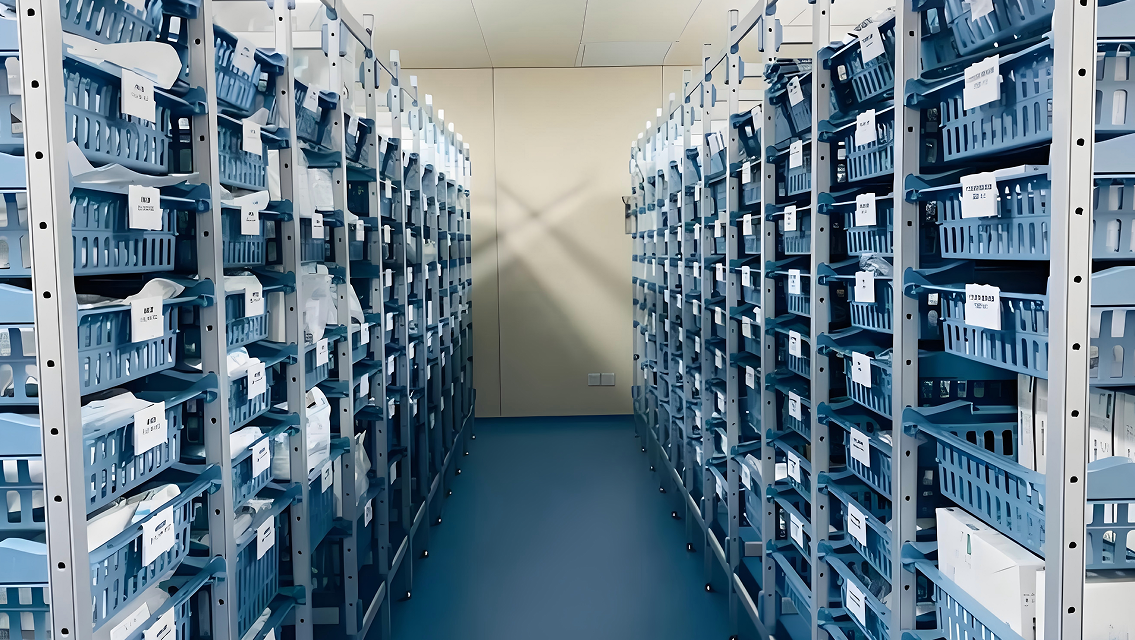
Benchmark Case: High-value Consumables and Surgical Instrument Management Project of a PLA General Hospital
As a large Grade A tertiary hospital, it conducts over 100 surgeries daily, with a wide variety of high-value consumables and frequent circulation. It adopts an integrated solution of "RFID + Hospital Information System (HIS)" to realize the whole-life cycle management of high-value consumables:
1. Warehousing Coding: When high-value consumables are warehoused, attach passive RFID tags to each product, quickly complete batch warehousing registration through RFID reading and writing equipment, and synchronize the data to the HIS system;
2.Surgical Traceability: Before surgery, scan consumable tags with mobile RFID reading terminals; during surgery, record consumable usage in real-time; after surgery, upload data to the system to form a complete traceability chain covering "warehousing - application - usage - write-off";
3. Sterilization Closed-loop for Instruments: Attach high-temperature resistant RFID tags to surgical instrument kits, deploy reading and writing equipment at all links in sterilization workshops and operating rooms, and track the entire sterilization process (e.g., sterilization temperature and duration).
Logistics Industry: Circular Asset Tracking for Cost Reduction and Efficiency Improvement
Benchmark Case: Cainiao Network Circular Box Intelligent Tracking Project
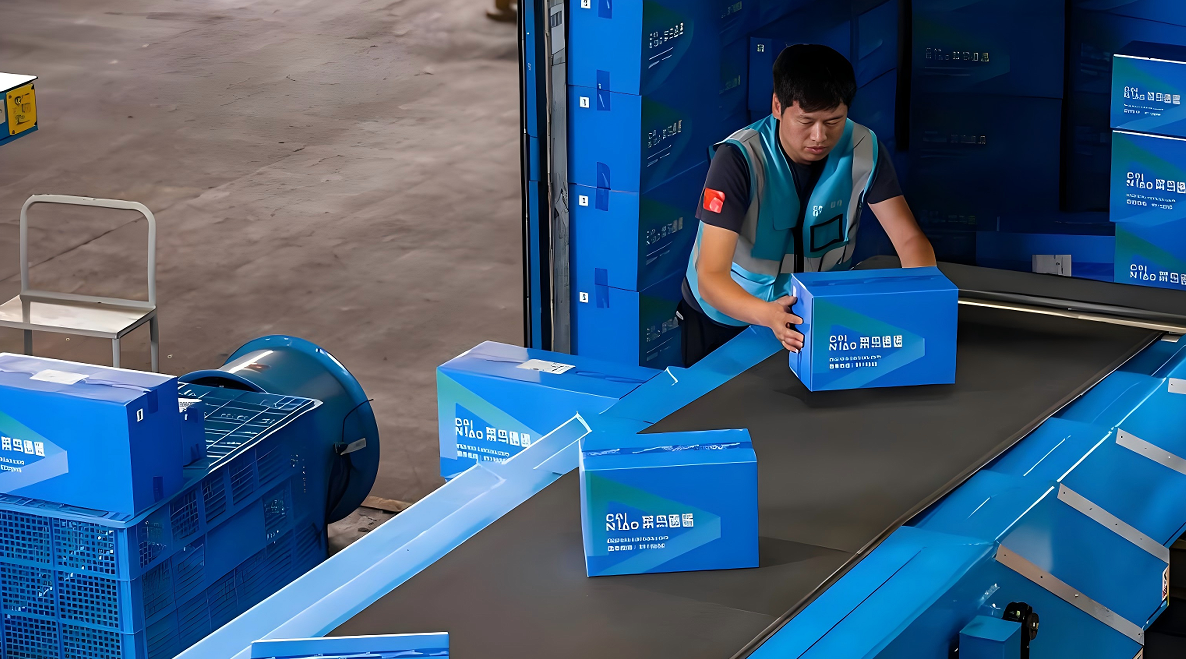
Cainiao Network has deployed millions of circular boxes in its national logistics network for the transfer and transportation of e-commerce packages. To address circular box management challenges, it has built an RFID intelligent tracking system:
1. Asset Identification: Install waterproof and wear-resistant RFID tags on the inner wall of each circular box, inputting information such as specifications, affiliated regions, and deployment time;
2.Node Data Collection: Deploy RFID access control reading and writing equipment at transit warehouses, sorting centers, and distribution stations nationwide to achieve full-path tracking from "warehouse to warehouse";
3. Intelligent Scheduling: Based on circular box distribution data collected by RFID, the system optimizes scheduling plans through algorithms, accurately allocating idle circular boxes to demand areas and reducing empty-box transportation; meanwhile, it automatically generates scrapping reminders according to the usage times and damage status recorded by the tags.
RFID is not a simple "technology replacement" but breaks down the "information silos" in asset management through data, realizing the transformation from "passive recording" to "active control". Its core values lie in improving efficiency, reducing costs, avoiding risks, and enabling data-driven decision-making. For enterprises, the implementation of RFID asset management projects requires grasping three key points:
1. Precise Scenario Matching: Select RFID tags suitable for industry characteristics (e.g., anti-metal tags for manufacturing, high-temperature resistant tags for the medical industry);
2. Data Link Connection: Connect the RFID system with the enterprise's existing management systems (e.g., ERP, HIS) to achieve data intercommunication;
3. Phased Promotion: Start with core assets and gradually expand the application scope to reduce implementation difficulties.


Let's get in touch.
Privacy statement: Your privacy is very important to Us. Our company promises not to disclose your personal information to any external company with out your explicit permission.
Fill in more information so that we can get in touch with you faster
Privacy statement: Your privacy is very important to Us. Our company promises not to disclose your personal information to any external company with out your explicit permission.