
Please Leave Us A Message
Privacy statement: Your privacy is very important to Us. Our company promises not to disclose your personal information to any external company with out your explicit permission.
 Xuzhou Huahao Information Technology Co., Ltd.
Amid the global wave of digital transformation in healthcare, high-precision, intelligent temperature monitoring technology is emerging as a core pillar of clinical decision-making and health management. Leveraging the technological accumulation of China Electronics Technology Hikvision Group in intelligent sensing, Haikang Borui has launched medical-grade intelligent temperature-sensing chips. Boasting sub-clinical precision of ±0.1℃, an ultra-thin flexible design, and full-process digital monitoring capabilities, these chips are driving neonatal care and elderly chronic disease management into a new phase of "precision sensing and intelligent intervention."
I. Technological Breakthrough: Redefining Medical Temperature Measurement Standards
Haikang Borui's intelligent temperature-sensing chips adopt passive RFID technology, breaking through the precision bottleneck of traditional NTC thermistors (±0.3℃). They achieve an error rate of ±0.1℃ within the temperature range of -20℃ to 65℃, meeting the demands of stringent scenarios such as ICU intensive care and neonatal temperature management.
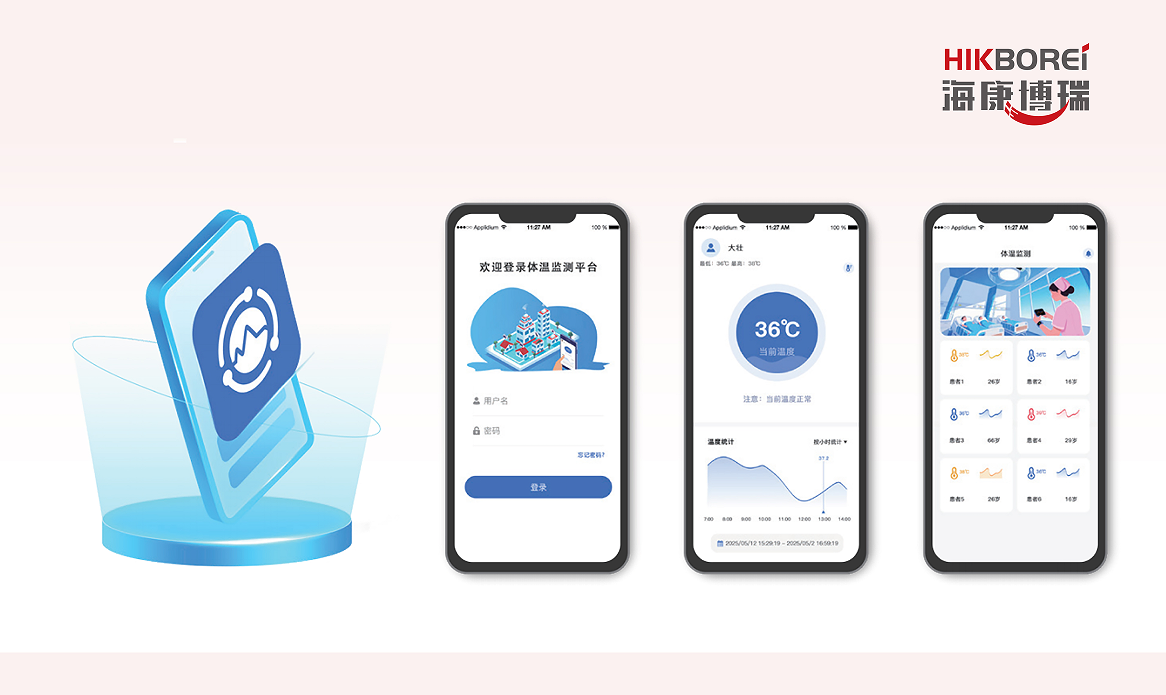
With their ultra-thin flexible design, the chips support multiple material surfaces and can be seamlessly integrated into carriers like medical wristbands and dressing patches. Through the architecture of "temperature-sensing patch + reader + cloud platform," they enable 24-hour automatic upload and visual analysis of temperature data, completely transforming the inefficient model of single-point measurement and manual recording associated with traditional mercury thermometers or forehead thermometers.
II. Neonatal Care: From Passive Monitoring to Active Protection
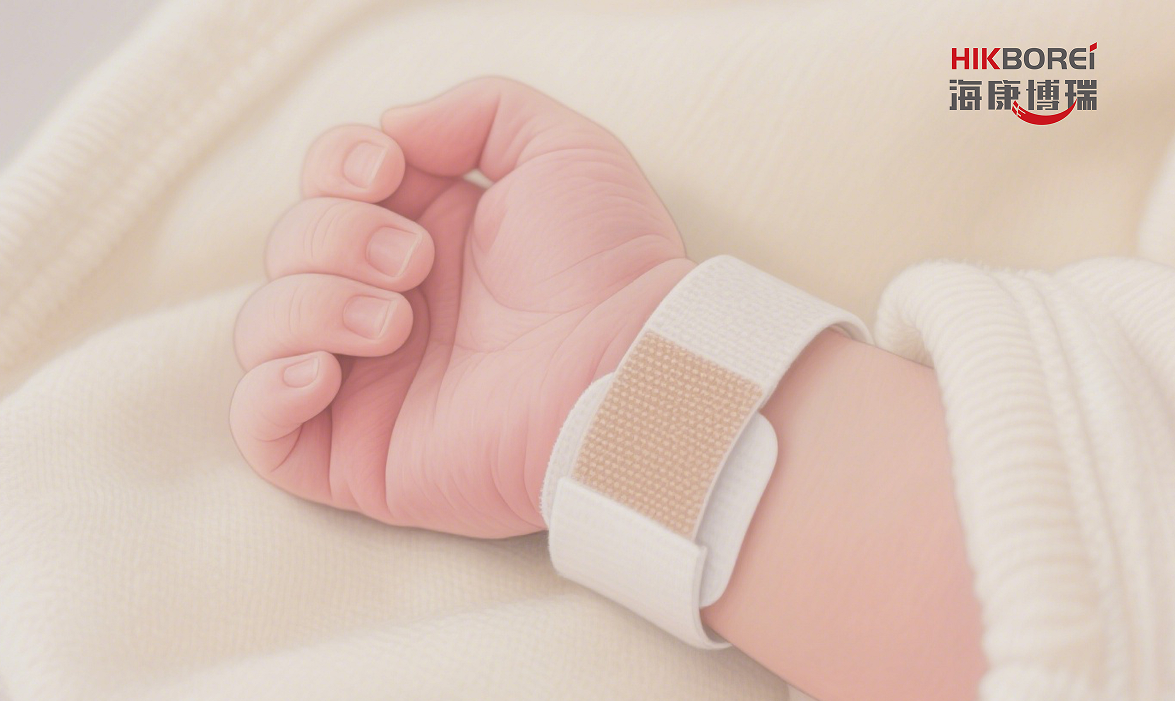
Newborns have immature temperature regulation functions, with an incidence of abnormal body temperature as high as 12%-15%. Haikang Borui has developed intelligent wristbands tailored for newborns, which use flexible temperature-sensing chips to capture real-time fluctuations in body surface temperature. Combined with cloud-based AI algorithms, these wristbands establish individual temperature baseline models.
When body temperature deviates from the normal range, the system automatically triggers early warnings: it can prompt via flashing lights on the nurse station's LED screen, send SMS notifications, activate department-level alarms, and link with incubator temperature adjustments. This solution has reduced the incidence of neonatal hypothermia and narrowed temperature fluctuations during jaundice blue light therapy.
The wristbands feature a medical-grade biocompatible design, allowing continuous wear for 72 hours without replacement, thus addressing issues like frequent detachment and skin allergies common with traditional electronic thermometers.
III. Elderly Health Management: Building a New Ecosystem for Chronic Disease Prevention and Control
Given the high incidence of chronic diseases among the elderly (with a prevalence rate of 79.4% among people over 60 in China), Haikang Borui's temperature-sensing chips can be deeply integrated with PPG (photoplethysmography) sensors to create a multi-modal health monitoring system.
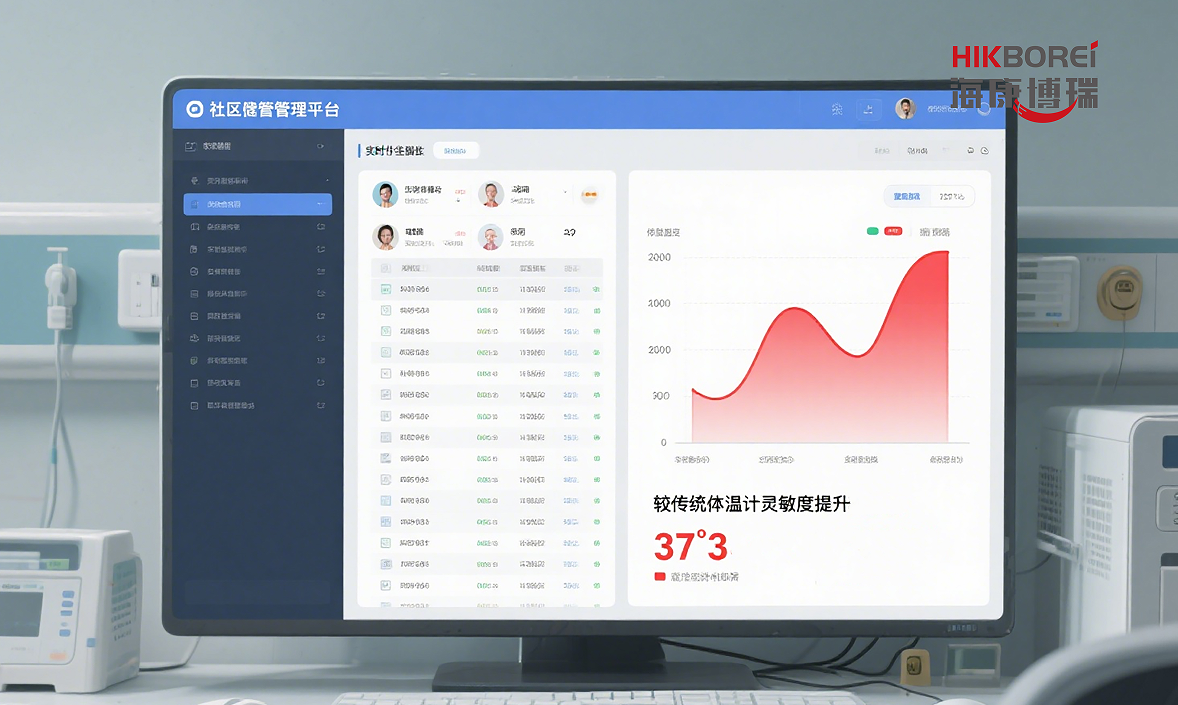
Intelligent bracelets equipped with these chips enable synchronous collection of 12 physiological indicators, including core body temperature, blood oxygen saturation, and heart rate variability. After preprocessing by edge computing modules, the data is transmitted in real-time to community health management platforms via 5G networks. The system exhibits high sensitivity in detecting early low-grade fever (37.3-38℃), significantly outperforming traditional mercury thermometers.
For elderly individuals with disabilities, the temperature-sensing chips, combined with millimeter-wave radar, can monitor bedridden status without violating privacy. In emergencies, an emergency call button links with community grid workers for on-site verification.
The medical application of Haikang Borui's intelligent temperature-sensing chips is not only an innovation in sensing technology but also a reconstruction of medical service models. Through the technical closed-loop of "precision sensing - intelligent decision-making - system linkage," they are promoting the transformation of healthcare from "disease treatment" to "health maintenance."
As 5G, AI, and IoT technologies converge further, this technology is expected to become a foundational cornerstone of the smart healthcare system, providing strong technical support for the "Healthy China 2030" strategy. As noted in the *New Generation Artificial Intelligence Development Plan*, intelligent sensing technology will be a key tool to address the uneven distribution of medical resources and enhance primary-level service capabilities. In this digital medical revolution, Haikang Borui is leading industry transformation with "core" strength, drawing a new blueprint for full-life-cycle health management.


Let's get in touch.
Privacy statement: Your privacy is very important to Us. Our company promises not to disclose your personal information to any external company with out your explicit permission.
Fill in more information so that we can get in touch with you faster
Privacy statement: Your privacy is very important to Us. Our company promises not to disclose your personal information to any external company with out your explicit permission.